Griffin Falls Camp
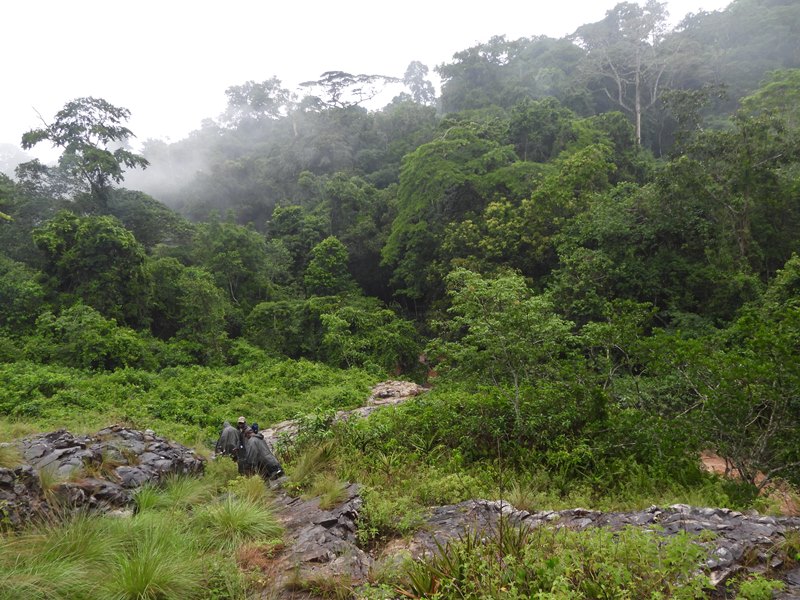
This section of Mabira forest is located near Lugazi town, neighboring the huge Mehta sugar plantation. This part of Mabira is only getting by discovered by the birders as it been mostly popular for the epic Zipline adventure and the walk to Griffin falls. The surrounding grassland and gardens greatly compliment the forest birds with lots of savannah species. There are few local settlements neighboring the forest and the sugar plantation sort of shields the forest and area from settlement and human activity. It is therefore great for birding with minimal interruptions.
If you are looking for a more diverse and big checklist for your birding trip to Mabira forest, this is perhaps the best section to go.
You will bird the open grasslands and gardens before taking on the trail along the edge of the forest which is quite productive. The bushes and grasslands and gardens around the forest are alive with waxbills, cisticolas, sunbirds, weavers, flycatchers, cuckoos, finches, mannikins, etc…
Going into the interior of forest, are good trails where you can have uninterrupted time listening to every sound of nature, and observe all the strata for the species of the interior.
Most birders looking to tick off the Nahan’s Francolin, which is potentially Mabira’s number one sought after bird, go to this part of Mabira for better chances.
The area has also given sightings of the Cassin’s Hawk-Eagle.
Mabira eco-tourism center Najjembe
This is the headquarters of the Mabira Forest Reserve and the most popular for activities into the forest. It is well situated just off the Jinja – Kampala highway at Najjembe.
This side of Mabira has better developed trails and are more extensive going deeper into the forest. Unlike Griffin Falls that has a buffer of grassland, gardens, and sugarcane plantation before entry into the forest, here at the eco-tourism center you arrive into the forest and most birding is in the forest interior.
The Forest Robin and African Thrush foraging on the ground welcome you as soon as you step on the trail in the early morning, followed by Red-tailed Bristlebill, Green-tailed Bristlebill, Brown-chested Alethe, Yellow-whiskered Greenbull, and Rufous Flycatcher-Thrush flashing from the thick undergrowth or hoping onto the trail to feed on the ants. The ground and lower strata will give you a good number of sightings before thinking about raising your head to the canopy.
Mabira Rainforest lodge road and trails
The Rain Forest Lodge, an upmarket lodging, is also located off Najjembe on the other side of the road, opposite the Mabira Eco tourism center. There is a 2km dirt road from the highway at Najjembe to the lodge and part of it goes through the forest. This bit of the forest offers excellent birding of the forest edge and some specials have ticked off along this stretch, such as the Forest Wood-hoopoe (Forest Scimitarbill). The only challenge is that it is a busy road and therefore frequent interruption from passersby.
Once at the Rainforest Lodge you can take on quiet trail into the forest for birdwatching.
Village tracks
Along the Jinja highway through Mabira Forest are village tracks that offer excellent forest edge and can greatly compliment your birding in Mabira. However expect interruption from speeding motorcycles and passersby.